mYoPIA management
WHY MYOPIA MANAGEMENT MATTERS?
- Myopia development is rapidly increasing in children
- Myopia increases your child's risk for serious eye diseases
- While glasses can help for blurry distance vison in myopia patients, the deterioration of vison is not stopped
- The higher the level of myopia (higher the prescription of your child), the more serious the risk of eye diseases
- In order to slow or even stop the progression of myopia in your child, treatment starting early is key
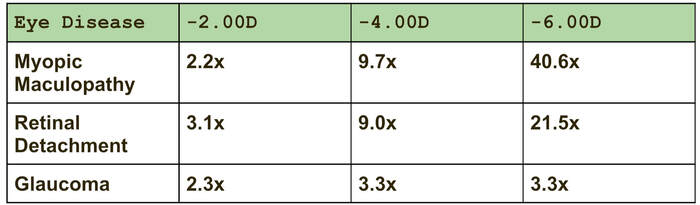
The higher the myopia, the greater the risk for serious eye disease.
|
What is Myopia?
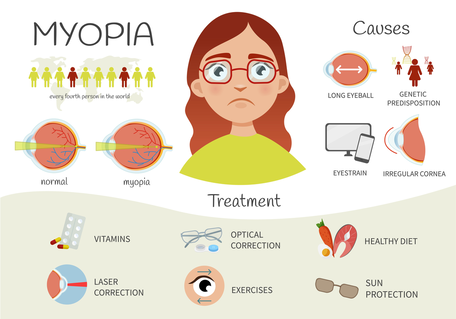
Myopia is the inability to see clearly unless the objects are close to your eyes. Myopia is also called nearsightedness or shortsightedness. This occurs because the eye grows too long from front to back. This elongation causes light to not focus on your retina but in front of it. Most cases of myopia start during childhood and will continue to progress. Early intervention with myopia treatment can slow, or even stop, the progression of your child's myopia. |
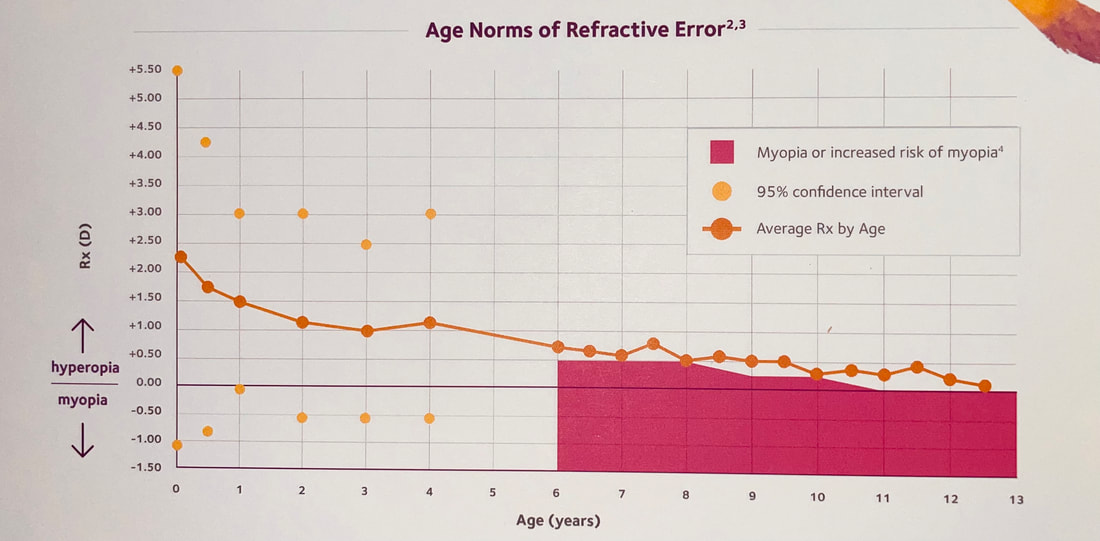
The chart below shows what age and prescription is the normal progression of myopia. The highlighted pink section of the chart is when your child has or is at risk of myopia and could be treated with myopia management.
Myopia Treatments
|
1. Overnight contact lenses
The contacts are specially designed to be worn only at night while sleeping and taken out in the morning. These KIDS lenses are custom for your child which reshape the front surface of the eye while sleeping, with the effects of the reshaping lasting all day. In order to reduce the progression of myopia for each patient, each lens is customized for each child. Because the lenses are to only be worn at night, your child will be able to now see during the day with no need for regular contacts or glasses. |
|
|
2. Daytime soft lenses
These contact lenses are for your child to wear during the day and removed each night. These contacts are different from regular contacts worn every day due to their special optical design that reduces the progression of myopia while also providing your child with clear vision during the day. |
|
3. Prescription drops
A prescription drop is an alternative to specialty contacts especially for younger children that may struggle with contact insertion. These drops are specifically made to reduce the progression of myopia. Your doctor will have a specialized plan for your child on when to administer the drops. During the day your child will wear either glasses or regular contacts.
A prescription drop is an alternative to specialty contacts especially for younger children that may struggle with contact insertion. These drops are specifically made to reduce the progression of myopia. Your doctor will have a specialized plan for your child on when to administer the drops. During the day your child will wear either glasses or regular contacts.
FAQs about Myopia
Is Myopia (Nearsightedness) dangerous?
Can Myopia be managed?
The younger the patient when myopia management begins, the more effective the treatment.
Will eyeglasses and contact lenses help with Myopia?
Will my child need surgery?
When can treatment start?
Is Myopia (Nearsightedness) dangerous?
- Scientific evidence has proven that myopic patients are more at risk to eye diseases and complications. Myopia is the sixth leading cause of blindness.
- Patients with mild myopia have an increase in the risk of retinal detachment, glaucoma, cataracts, and macular degeneration.
Can Myopia be managed?
- Myopia is a growing problem in children in the United State; 1 in 3 children now with myopia. It is important to manage myopia as part of your child's eye health due to the dangers that eye disease holds. The goal of myopia management is to slow or even stop the progression of myopia.
The younger the patient when myopia management begins, the more effective the treatment.
Will eyeglasses and contact lenses help with Myopia?
- Eyeglasses and standard contact lenses are cosmetic devices as well as functional enhancements, but they are only tools to assist with aesthetics and some forms of poor vision.
- But in children, myopia usually increases as time passes, even with the assistance of eyeglasses and standard contact lenses. Both standard glasses and soft contact lenses are not specifically designed to help prevent any eye diseases and conditions.
Will my child need surgery?
- No, myopia management is a non-surgical, non-invasive treatment that improves vision which reduces the long term risks associated with myopia. The treatment involves a customized contact lens and prescription eye drops. Your doctor will recommend a customized plan for your child.
When can treatment start?
- Treatment can start right away. Your doctor will look at the risks you child holds and take specific measurements not taken by most other eye doctors to ensure the best myopia management plan is selected for your child.
This chart below shows how an increase in myopia, increases the risks of specific eye diseases
To learn more about Myopia Management contact Park Family Eye Care to set up an appointment consultation